Five Year Population Health Strategy
The Five Year Population Health Strategy sets out the long‑term vision and priorities for improving health outcomes, reducing inequalities and strengthening equitable access to high‑quality care. Developed in line with NHS England’s Medium‑Term Planning Framework and the Strategic Commissioning Framework, the Strategy articulates how the DLN ICB Cluster will contribute to the national “three shifts” – sickness to prevention, hospital to community, and analogue to digital – while supporting financial sustainability and modernising service delivery.
What our citizens are telling us
Engagement with our citizens and communities has told us people want more control over their care, timely access to local services and clear, joined-up communication. They value digital tools – but only if inclusive, simple and optional. Feedback highlights the need for equity, cultural sensitivity and continuity. These insights have shaped our priorities and ensure our strategy reflects what matters most to people.
The Strategy is underpinned by a clear case for change, based on what citizens have told us:
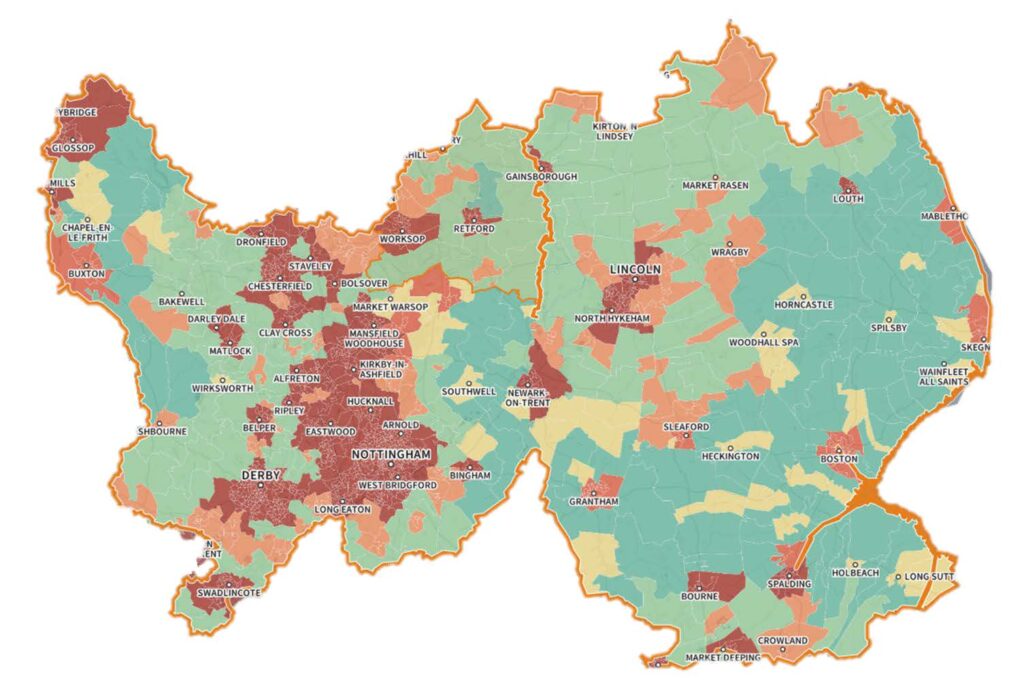
- A diverse population with different needs: There are 3.25 million people living across cities, towns, rural and coastal communities. While a large proportion of the population live in urban areas, the Cluster is mainly rural and coastal. These differences shape health needs and require tailored, neighbourhood-based solutions to deliver equitable, effective care for all communities.
- Deep and concentrated inequalities: 720,000 people – almost a quarter of our population – live in England’s most deprived areas, concentrated in inner-city neighbourhoods, former industrial towns and along the Lincolnshire coast. Deprivation increases exposure to risk factors (smoking, obesity, poor housing, insecurity), reduces uptake of prevention and accelerates early onset of long-term conditions, multimorbidity and poorer outcomes.
- Worsening healthy life expectancy and rising years in poor health: Healthy Life Expectancy (HLE) is declining, for both men and women, with people (on average) spending 18-26 years in poor health depending on where they live. The gap between Life Expectancy and Healthy Life Expectancy is widening, meaning earlier onset of long-term conditions, multimorbidity and frailty – particularly in more deprived communities. This in turn drives quicker progression to planned healthcare (diagnostics and tests, elective surgeries, chronic condition management), and means people experience more crises (exacerbations, falls, infections, mental health) resulting in more urgent primary care usage, ambulance usage, A&E attendances, emergency admissions & bed days.
- An unsustainable care delivery model: Analysis in once ICB identified that just 7% of the population (the End of Life, Frailty and Multimorbidity with 3+ long term conditions) account for: around 35% of healthcare costs around 30% of elective activity around 50% of ambulance calls, emergency admissions and bed days A significant shift to prevention, proactive and community-based delivery is required, together with a shift in the pattern of healthcare spending so the share of expenditure on hospital care falls with proportionally greater investment in out of hospital care.
Our vision
Every Person in every community will live longer and healthier lives. We will improve population health outcomes, reduce inequalities and ensure equitable access across Derby & Derbyshire, Lincolnshire and Nottingham and Nottinghamshire.
Our priorities
The strategy identifies five Population Segment Priorities and three cross-cutting priorities. These priorities seek to provide a balance of addressing ‘upstream’ health needs whilst also addressing the need to provide better quality, accessible, integrated care that tackles the significant operational and financial pressures the NHS faces ‘here and now’.
Cross-cutting priorities (Years 1–2)
- Vaccinations and screening
- Strong general practice
- Outpatient redesign
Population segment priorities (Years 1–2)
Start well:
- Children & Young People Obesity (0–19)
- Children & Young People Mental Health (0–19)
Live well:
- Early Multimorbidity / 2+ Long-Term Conditions (40–64)
Age well:
- Frailty
Die well:
- End of Life
We will look to improve health outcomes for the entire population while ensuring those with the greatest need receive the most support – making sure service provision remains within available NHS financial resources and provides best value for money. Improved productivity and efficiency will be central to delivering our population health strategy priorities. By focusing on eradicating ‘low value’ activity, reducing unwarranted variation, improving pathways and maximising digital and workforce transformation, we can release capacity, improve system finances and redirect scare resources towards interventions that deliver the greatest population health benefit.
Neighbourhood Health: The Engine Room
Neighbourhood health is the ‘engine room’ for delivering our population health priorities – combining an NHS delivery platform and a place-based health improvement model. The NHS delivery platform sets out how health services integrate at a neighbourhood level; the health improvement model aligns partners around lifestyle, early years, social connection and inclusion health.
Expected system-wide impact
Through successful implementation of our Population Health Strategy, we expect: More people living longer in good health, fewer preventable crises. Reduced inequalities in access, experience and outcomes. Significant hospital to community shift: fewer outpatient appointments, emergency department attendances, non-elective admissions and bed days. Better use of NHS resources and improved financial sustainability.