Lung Cancer Screening

If you’re aged 55 to 74 and have ever smoked, you may be invited to have a lung health check as part of the NHS Lung Cancer Screening Programme.

The programme aims to find lung cancer at an early stage, often before symptoms develop. Detecting lung cancer early can make it easier to treat and improve the chances of successful treatment.

Why Lung Cancer Screening Matters

Lung cancer causes more deaths than any other cancer in the UK. In its early stages, there are often no signs or symptoms, which means it can be difficult to detect until it has become more advanced.

Lung cancer screening helps identify people who are at a higher risk of developing lung cancer. If cancer is found early, treatment is more likely to be successful.

If you receive an invitation, we encourage you to attend your appointment. Early detection saves lives.

A lung health check does not replace seeing your GP if you develop new or worrying symptoms.

  • Who is Eligible?

    The NHS is rolling out targeted lung cancer screening across England. Lung health checks are currently available in selected areas, including Lincolnshire.

    You may be invited if you:

    • are aged 55 to 74
    • currently smoke or have smoked in the past
    • are registered with a GP practice in Lincolnshire
    • live in an area where lung health checks are currently being offered

    Invitations are sent automatically to eligible people, so you do not usually need to contact your GP.

    If you're not sure your GP record shows that you currently smoke or have smoked in the past, contact your GP surgery and ask them to update your record. This will help ensure you receive an invitation when you become eligible.

  • What is a lung health check?

    Your lung health check is usually carried out by a specially trained nurse or healthcare professional. The first appointment is normally by telephone and takes around 20 to 30 minutes.

    During your appointment, you will be asked about:

    • your general health
    • your breathing and lung health
    • your smoking history
    • your personal and family medical history
    • your lifestyle

    If you currently smoke, you will be offered advice and support to help you stop smoking, including referral to a specialist stop smoking service if you wish.

  • What happens after the telephone assessment?

    At the end of your assessment, one of the following will happen:

    No further action

    If your assessment suggests you are not currently at higher risk of developing lung cancer, you will be discharged from the service. Your GP will be informed.

    Face-to-face appointment and CT scan

    If your assessment shows that you are at a higher risk of developing lung cancer, you will be invited to a face-to-face appointment with a nurse.

    This appointment usually takes place in a mobile screening unit or community diagnostic centre at a convenient local location.

    The nurse may:

    • measure your height and weight
    • check your blood pressure
    • assess your breathing if needed

    For most people, the appointment will finish with a low-dose CT scan.
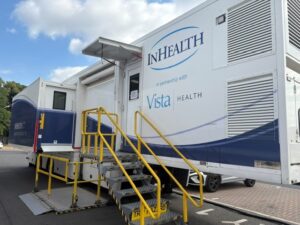
    Photograph of a mobile lung cancer screening unit

  • What is a low-dose CT scan?

    A low-dose CT scan uses a small amount of radiation to produce detailed pictures of your lungs.

    The scan:

    • is quick and painless
    • usually takes only a few minutes
    • can detect lung cancer before symptoms develop
    • can also identify other lung conditions

    Although your appointment may last around 30 minutes, the scan itself only takes a few minutes.

    Most people who have a CT scan will not have lung cancer.
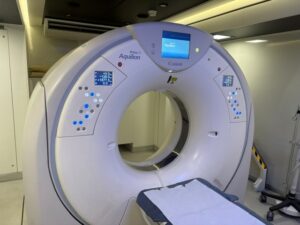
    Photograph of a mobile CT scanner

  • Getting your CT scan results

    You should receive your results within four weeks of your scan.

    There are several possible outcomes.

    No significant abnormalities found

    If no significant abnormalities are found, you will receive a letter confirming your results. Depending on your level of risk, you may be invited for another CT scan in approximately 24 months. A separate invitation will be sent nearer the time.

    Further monitoring

    Sometimes the scan shows small changes that are unlikely to be cancer but need to be monitored. If this happens, you will receive a letter explaining your results and inviting you for another CT scan in 3, 6 or 12 months.

    Further investigation

    If the scan shows something that needs further investigation, you may be contacted by telephone within two weeks and referred for additional tests or treatment if needed.

If you have not been invited

The Lung Cancer Screening Programme is being introduced across England in phases, starting in areas with higher rates of lung cancer.

If you have not yet been invited, it may be because the programme is not currently available in your area or because you do not yet meet the eligibility criteria.

If you think you should have been invited, contact our team for advice:

Signs and symptoms of lung cancer

Do not wait for a lung health check if you develop symptoms.

Contact your GP as soon as possible if you have:

  • a cough that lasts longer than three weeks
  • a cough that changes or gets worse
  • coughing up blood
  • chest infections that keep coming back
  • shortness of breath
  • chest pain or pain when breathing or coughing
  • unexplained tiredness lasting four weeks or more
  • unexplained weight loss
  • loss of appetite

Looking after your lung health

The single best thing you can do to reduce your risk of lung cancer is to stop smoking.

If you would like help to quit, your lung health check team, GP practice or local stop smoking service can provide free advice and support.

FAQs

  • I'm under 55. Why can't I have lung cancer screening?

    Currently, lung cancer screening is for people aged 55-74 who have ever smoked. Screening is proven to be beneficial in medical research in this age group. Below this age we do not have enough evidence that we can achieve a definite benefit. However, anyone can get lung cancer so if you have any concerns or are experiencing symptoms, contact your GP immediately.

  • I'm over 74. Why can't I have lung cancer screening?

    Currently, lung cancer screening is for people aged 55-74 who have ever smoked. Screening is proven to be beneficial in medical research in this age group. Above this age we do not have enough evidence that we can achieve definite benefit. The main concern is that the risks from treatment and other medical conditions begin to outweigh the benefits of screening from 75 years and over. However, anyone can get lung cancer so if you have any concerns or are experiencing symptoms, contact your GP immediately.

  • Why is lung cancer screening not offered to people who have experienced passive smoking?

    Currently, lung cancer screening is for people aged 55-74 who have ever smoked. This is because they are at a higher risk of lung disease or lung cancer than people who have never smoked. This is based on medical research. Research to show benefits in other settings, such as those who have never smoked, have smoked low amounts, or who have experienced passive smoking, is not yet available. However, anyone can get lung cancer so if you have any concerns or are experiencing symptoms, contact your GP immediately.

  • Why is lung cancer screening only available to people who have smoked?

    Currently, lung cancer screening is for people aged 55-74 who have ever smoked. This is because they are at a higher risk of lung disease or lung cancer than people who have never smoked. However, anyone can get lung cancer so if you have any concerns or are experiencing symptoms, contact your GP immediately.

  • Why are CT scans only offered to some people who have lung cancer screening?

    Currently, lung cancer screening is for people aged 55-74 who have ever smoked. At the screening, people who are found to have a higher risk of lung cancer will be offered a low dose CT scan. Medical research has shown us that people who meet this risk threshold are most likely to benefit from a CT scan, because lung cancer may be found early. For people who do not meet the risk threshold, we do not have enough evidence that they will benefit, compared to the potential harms of having a CT scan. However, anyone can get lung cancer so if you have symptoms that are worrying you, contact your GP immediately.

  • There's a history of lung cancer in my family so can I be tested?

    Currently, lung cancer screening is for people aged 55-74 who have ever smoked. This is because they are at a higher risk of getting lung cancer. There is currently no proof from medical research that an inherited risk of cancer alone can reliably inform who is more at risk of having lung cancer. Smoking history is proven to be the best measure for identifying who should have a lung check because former/current smokers are more likely to develop lung cancer. However, we do take family history into account in thelung health check risk assessment.

  • I've quit smoking so why do I need to go?

    Well done for successfully quitting smoking. In doing so, you have reduced your risk of getting lung cancer. However, you still have a higher risk of lung cancer than someone who has never smoked, so you should still go for the screening.

  • I'm scared about what they might find at the appointment

    It's completely understandable that you might be a little nervous about having a lung cancer screening, but it is really important that you go. You can request that someone comes with you to the appointment, such as a family member or friend. Chances are everything will be ok but if it is lung cancer, catching it early can make all the difference.

  • What happens in the screening process?

    Your initial appointment may be in person, by phone, or online. A health professional will ask about your health and lifestyle to find out more about your risk of developing lung cancer. If the lung health check finds you're at a higher risk of developing lung cancer, you may be invited for a low dose CT scan. This is very common and is not necessarily a cause for concern. Your CT scan will be completed either at a local Community Diagnostic Centre (CDC) or in a mobile CT unit within the community. The lung cancer screening team will write to you and your GP with details of your results.

  • What happens at the CT scan?

    A CT scan takes a detailed picture of your lungs and checks for any signs of lung cancer or lung disease. During the scan, the bed moves in and out of the scanner. Your head and legs stay outside of the scanner and you do not go into an enclosed space. The scan is done in either a mobile scanning unit in your local area, or at a local hospital, to make it as easy as possible for you to get to. It only takes a few minutes and does not hurt. You can also bring a friend or relative with you for support.

  • When will I receive my results?

    You will receive a letter or a call with your results within four weeks of the CT scan. This will tell you what happens next. If the scan shows anything concerning, you may be referred for further lung scans or treatment. Around 15 out of every 100 people screened have nodules on their lungs. Most nodules are harmless and caused by something else like scarring from a previous chest infection. Around 1 in 100 people who go for a CT scan are diagnosed with lung cancer. If the scan shows nothing of concern, you will be invited back for another scan every two years until you are 75.

Resources