Work is continuing to improve earlier cancer diagnosis in Lincolnshire. This is one of the key priorities of the NHS’s Cancer Plan, which has been announced today.
Supporting early bowel cancer diagnoses
Figures also show that 84% of people across the East Midlands who have been invited to participate in bowel screening have returned their Faecal Immunochemical Test (FIT), supporting early bowel cancer diagnoses – this is above the national target of 80%.
The FIT test is a non-invasive test that detects hidden blood in poo, which can be an early sign of bowel cancer. The test is done at home, requires only one small sample and is returned by post in a sealed container. The tests have been expanded to all over 50s as part of government plans to improve early cancer diagnosis.
In Lincolnshire
- Breast Pain (Mastalgia) Pathway – In Lincolnshire, the Breast Pain Pathway enables patients experiencing breast pain that is not indicative of breast cancer to be seen in a community setting by a specialist breast pain nurse.
- Robotic surgery – Lincolnshire is now using robotic-assisted surgery for selected urology and colorectal cancer procedures. This approach supports improved patient recovery and outcomes, while reducing the length of hospital stay following surgery.
- Health Inequalities – ACE programme – Partnered with Lincolnshire Voluntary Engagement Team and 14 local community organisations to help different communities access diagnostics, treatment and support in survivorship to reduce HIs. 5 of these are being taken forward to scale up to more parts of Lincolnshire
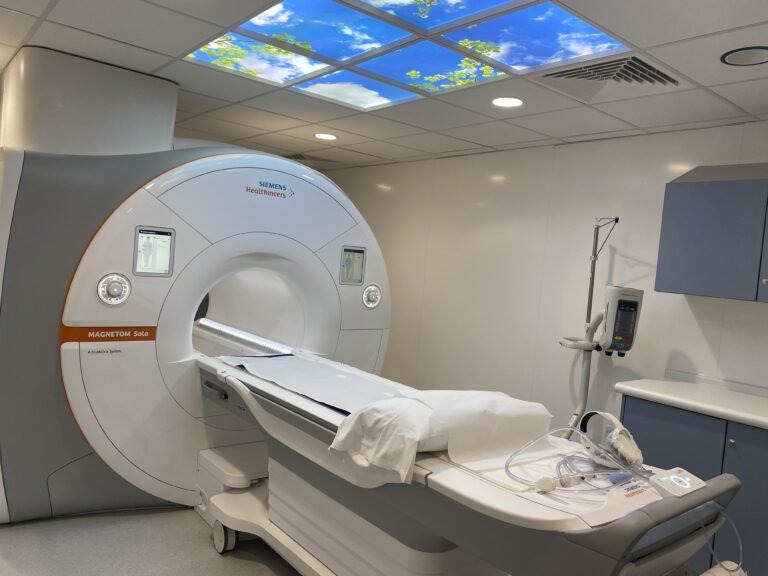
- Community Diagnostic Centres (CDCs) – In Lincolnshire, in addition to the CDC in Grantham that opened in April 2022, new CDCs have opened in Skegness in November 2024 and Lincoln in December 2024, with a fourth CDC in development and due to open in Boston in 2027.
The Plan focuses on three big shifts
The National Cancer Plan sets out how cancer services will be stabilised and then transformed over the next decade, with a clear ambition to improve outcomes, survival and experience, while tackling long-standing inequalities. At its core, the Plan focuses on three big shifts:
- diagnosing cancer earlier and at greater scale
- restoring and sustaining performance against cancer standards
- delivering more personalised, people-centred care, including better support for those living with and beyond cancer.
Dr Dave Briggs, Executive Director of Outcomes (Medical) across the NHS Derby and Derbyshire, Lincolnshire and Nottingham and Nottinghamshire cluster, said: “By detecting and treating cancer at an earlier stage, we can boost people’s chances of survival. We are also making cancer diagnosis more accessible than ever before through home screening kits like the FIT test, mobile screening units for lung cancer which are conveniently located in communities and the rollout of community diagnostic centres.”