
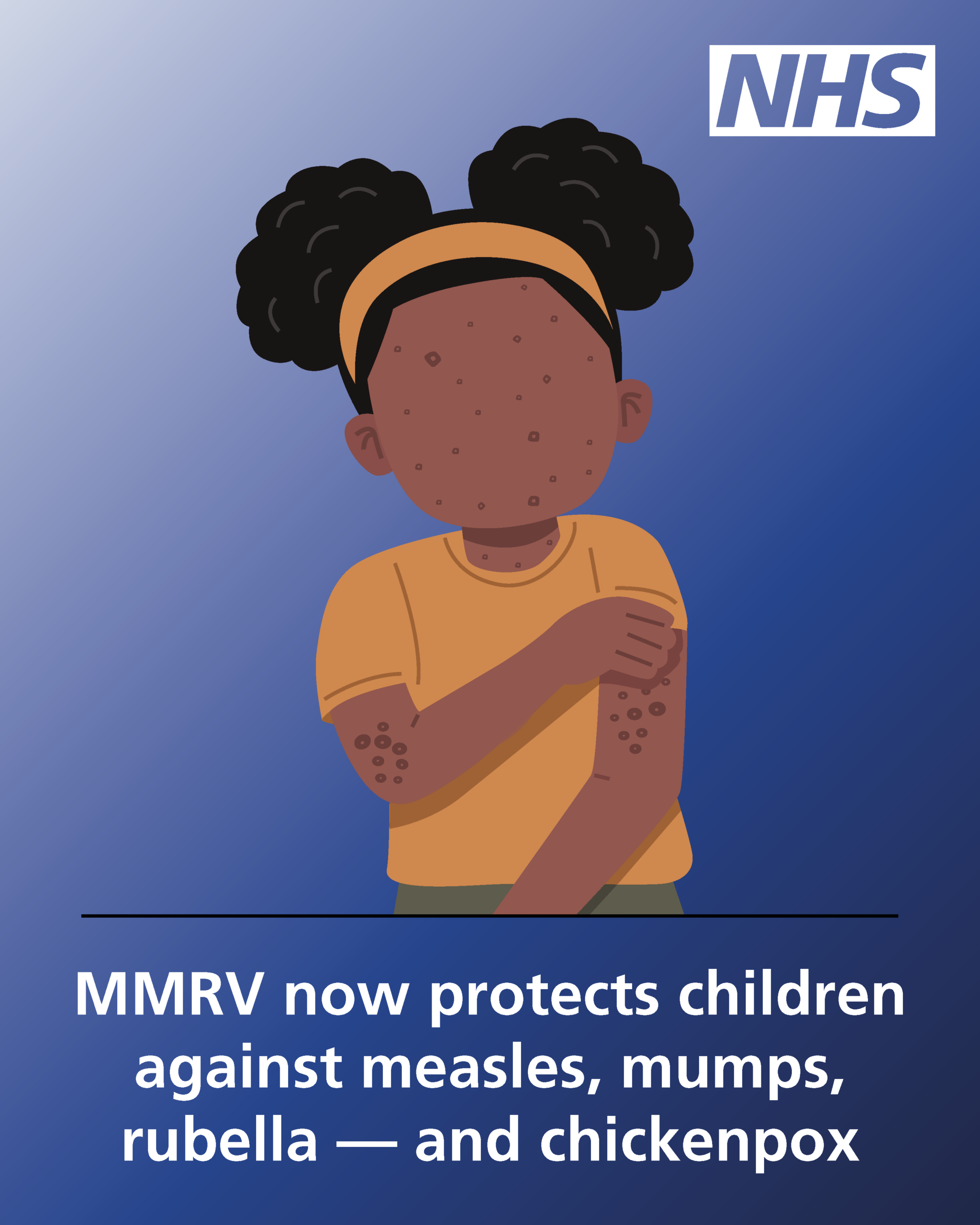
MMRV is a combined vaccine that protects against four diseases – measles, mumps, rubella, and varicella (chickenpox) – and replaces the older MMR vaccine that most people will be aware of, adding protection against chickenpox.
For most children chickenpox is mild but for some it can lead to serious complications
It is a highly contagious illness causing an itchy rash of fluid-filled blisters, usually in children although it can also affect adults, including pregnant women and people who are immunocompromised.
Already in use in other countries including Canada and Germany, the MMRV vaccine offers protection against four diseases compared to the MMR’s three diseases. From 1 January 2026, all children will be offered the MMRV vaccine for their routine childhood schedule.
“The MMRV vaccine will be available as part of the childhood routine 2-dose vaccination schedule,” explains Steph Hart, Assistant Locality Lead – Vaccination Programme, NHS Lincolnshire ICB. “This means children turning 1 year from 1January 2026 will be offered two doses – one at 12 months and a second at 18 months.”
Catch-up programme for older children later in the year
There will also be a single dose MMRV catch up programme for older children starting later in the year, which is about going further and more rapidly to reduce transmission of chickenpox in the population.
“Children aged over 1 year to under 18 months at the 31 December 2025 will be offered two doses of MMRV – one at 18 months and a second at 3 years 4 months. Whilst children aged 18 months to under 3 years 4 months as of 31 December 2025 will be offered a single dose of MMRV at 3 years 4 months.
“Older children – those aged 3 years 4 months to under 6 years as of 31 December 2025 – will be able to have the MMRV vaccine during a catch-up programme due to be run between 26 November 2026 and 31 March 2028,” comments Steph.
The change to the childhood immunisation schedule as a result of the introduction of the new MMRV vaccine will protect around half a million children each year against measles, mumps, rubella, and now chickenpox too.
Providing earlier and long-lasting protection for children
“Bringing forward the second dose of the MMR part of the MMRV vaccine from 3 years 4 months to 18 months for children turning 18 months on or after 1 January 2026 will help improve vaccine uptake and provide earlier protection for children, which, from a measles point of view, is particularly important following the outbreaks of measles seen in the UK and Europe this year.
“As far as chickenpox is concerned, having two doses of the MMRV vaccine will also mean long-lasting immunity for children and prevention of more serious outcomes and complications, as well as fewer days missed at nursery or school and less time parents need to take off work,” adds Steph.
Your child’s GP surgery will usually invite you for your child’s first dose of MMRV around their first birthday and for a second around 18 months. Older children who missed doses will be able to get them at their GP surgery or possibly at their school.