
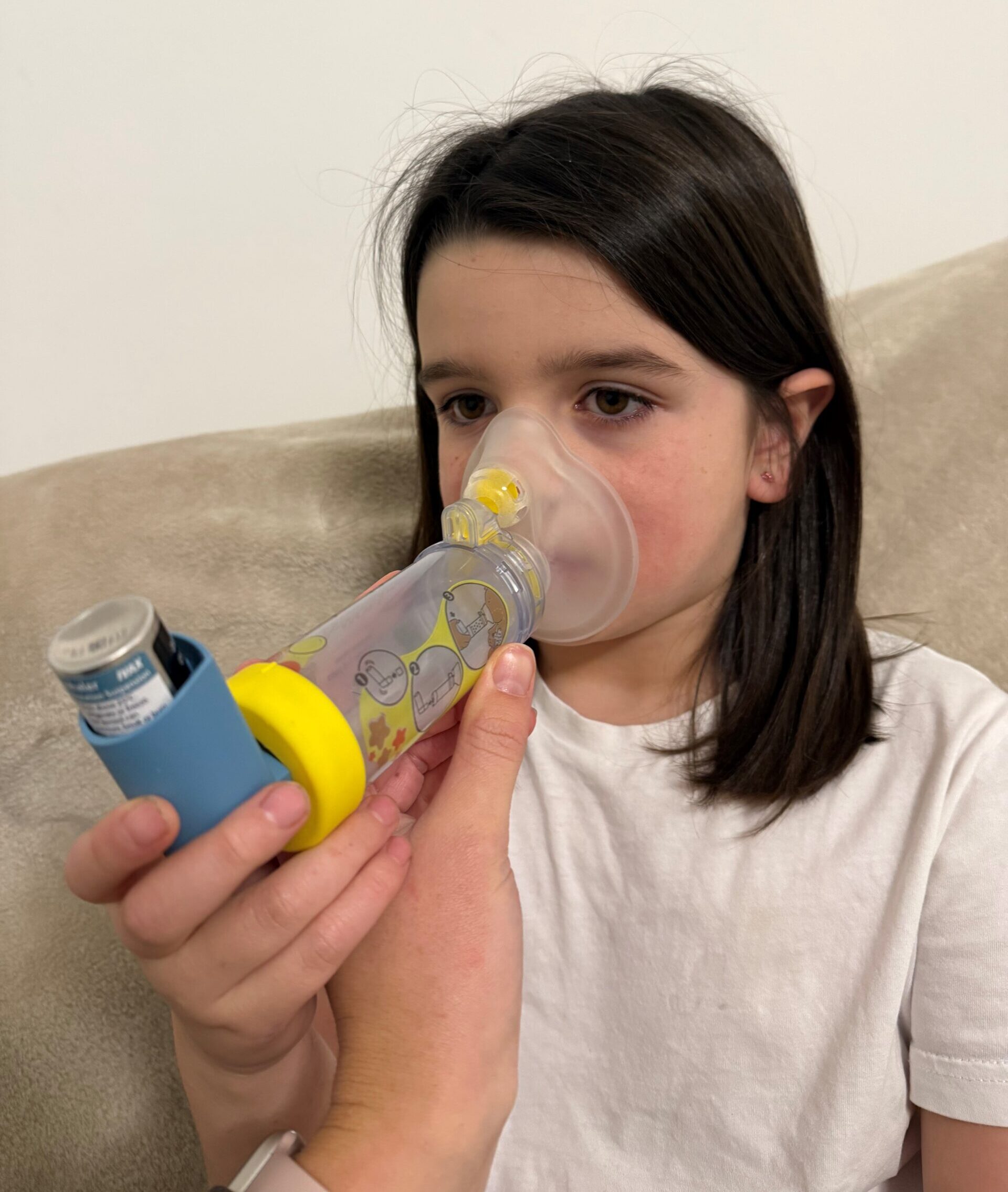
The NHS across Derbyshire, Lincolnshire and Nottinghamshire are raising awareness of Asthma on World Asthma Day, Tuesday 5 May 2026.
Over five million people in the UK are currently receiving treatment for asthma
Asthma is a common long-term condition that can cause coughing, wheezing, chest tightness and breathlessness.
There are 1.1 million children (1 in 11) and 4.3 million adults (1 in 12) who suffer from this condition.
Asthma prevalence is thought to have plateaued since the late 1990s, although the UK still has some of the highest rates in Europe.
Keeping your asthma under control
The severity of asthma symptoms vary from person to person, however, asthma can be controlled well in most people, although some people may have more persistent problems.
You should ensure that:
- You have a regular, and at least once a year, review of asthma;
- Your inhaler technique is checked at your review appointment;
- Request a copy of your asthma action plan.
- You use your inhalers as prescribed to keep the condition under control.
Ask your GP team for an asthma review
In addition, you should ask for a review of your asthma at your GP surgery. Especially if:
- you have been to A&E or into an Urgent Care setting with asthma,
- experiencing worsening symptoms or
- have concerns about your asthma.
It is also important to keep up to date with vaccinations.
Occasionally, asthma symptoms can get gradually or suddenly worse. This is known as an “asthma attack”, although doctors sometimes use the term “exacerbation”. Severe attacks may require hospital treatment and can be life threatening, although this is unusual.
Dr Dave Briggs, Executive Director of Outcomes (Medical) at NHS Derby and Derbyshire, Lincolnshire and Nottingham and Nottinghamshire ICB cluster, said:
“If you think that you or your child may have asthma speak to your GP. You should also talk to your GP or asthma nurse if you have been diagnosed with asthma and you are finding it difficult to control your symptoms.”
While there is no cure for asthma, there are a number of treatments that can help control the condition and more information can be found by visiting Asthma – NHS (www.nhs.uk).”
For children diagnosed with asthma, the condition may disappear or improve during the teenage years, although it can return later in life. Moderate or severe childhood asthma is more likely to persist or return later on.
The NHS spends about £1.3 billion treating and caring for people with asthma.
Smoking and vaping can worsen asthma symptoms. Both tobacco smoke and e-cigarette aerosol can irritate the airways, causing inflammation and making asthma attacks more likely.