
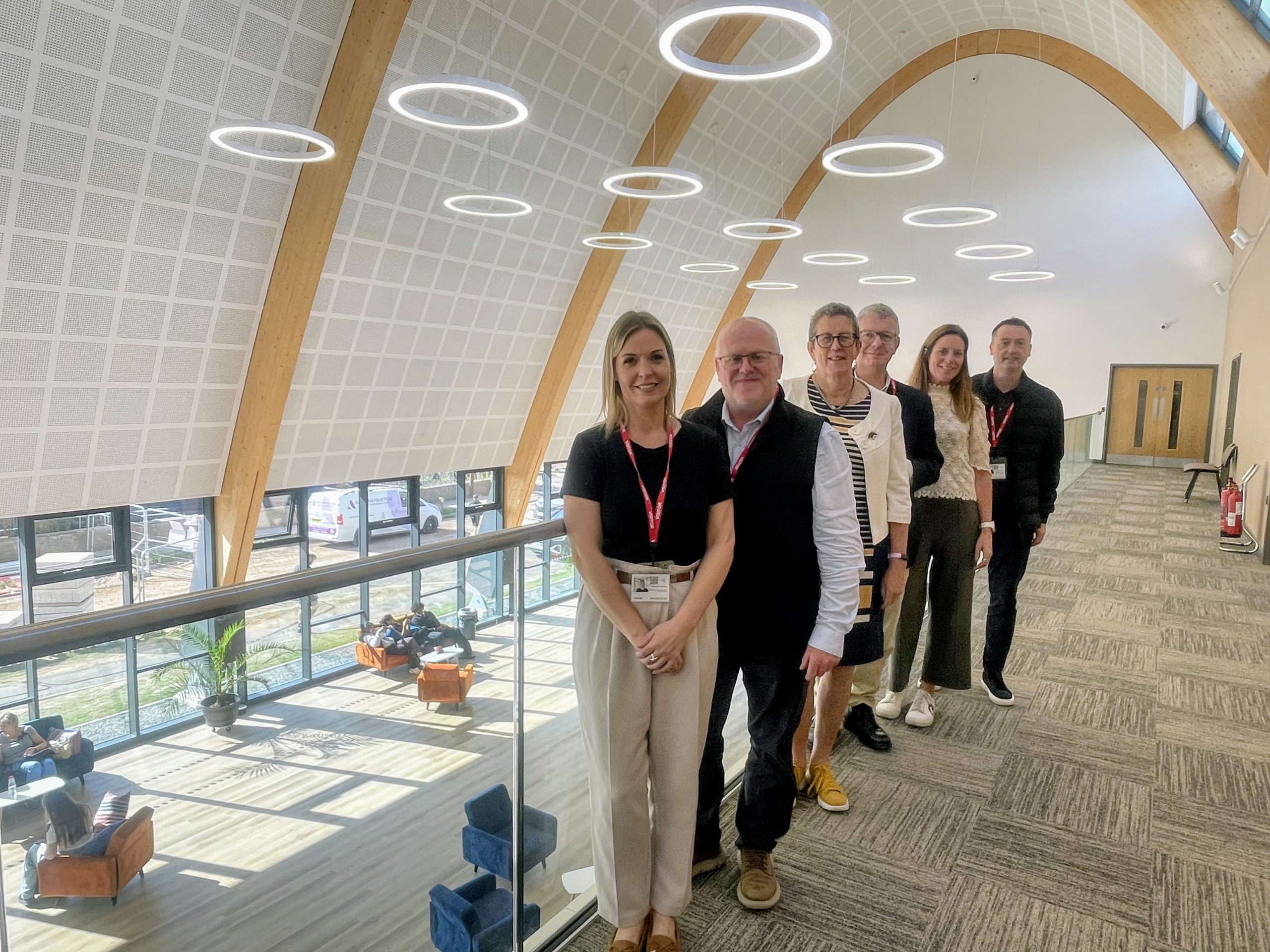
Our Chair Kathy McLean recently visited Boston and Mablethorpe to see first-hand how local organisations are working together to support healthier communities through physical activity, prevention and community partnerships. The visit focused on the theme of enabling place-based prevention and explored the assets, opportunities and challenges that connect health, wellbeing and community life across two of Lincolnshire’s priority places.
Joined by colleagues from Active Lincolnshire, Kathy visited a range of community facilities and met local leaders, educators, healthcare professionals, community organisations and residents who are helping people live healthier lives.
Building healthier communities in Boston
The day began at the Mayflower Campus, where significant regeneration is taking place across the area and there is growing collaboration between organisations based there. Discussions focused on creating stronger links between education, leisure, healthcare and community services to help residents stay well.
At Geoff Moulder Leisure Centre, Kathy learned about efforts to make physical activity more accessible, including school swimming programmes involving around 800 children each week and adaptations to improve accessibility. Partners also discussed the challenges created by rurality, transport barriers and cultural factors, and the importance of working together to encourage more people to be active.
A key theme was how local assets can work together to support prevention. Conversations explored opportunities to connect the leisure centre, the nearby community diagnostic centre and local schools and colleges, creating spaces that encourage self-care, healthy lifestyles and community involvement.
Kathy also met Year 10 sports studies students at Boston Grammar School, who spoke about the benefits of sport but also the challenges of accessing clubs and activities locally. Representatives from Boston United Community Foundation highlighted the important role sport plays in bringing communities together and engaging people from a wide range of backgrounds.
At Boston College, Kathy heard about plans to make more use of the college estate for community benefit, with a focus on health, wellbeing, digital inclusion and strengthening links with local services.
Tackling isolation and creating connections in Mablethorpe
The visit then moved to Mablethorpe, where the focus shifted to the role of community assets in supporting health and wellbeing in coastal communities.
At the Campus for Future Living, Kathy met colleagues from the local Primary Care Network and learned about programmes designed to improve wellbeing and reduce isolation. She also met local residents Ian and Steve, members of the Pinbusters bowling group run through the Lincoln and Lindsey Blind Society, who shared how physical activity and social connections have improved their lives and wellbeing.
Kathy also heard how the campus regularly opens its facilities to community groups and creates opportunities for residents to connect with others and access support in informal settings.
At the Station Leisure and Learning Centre, Kathy saw another example of a community hub in action. During the visit, a swimming session for people with visual impairments was taking place, while staff showcased a range of activities and programmes designed to help people stay active, connected and independent.
Reflecting on the visit, Kathy said: “It was inspiring to see the passion, commitment and creativity of the people working across Boston and Mablethorpe. What stood out most was the strength of the partnerships and the dedication of local organisations and community leaders who are finding practical ways to improve health and wellbeing.
“Whether through sport, education, leisure, healthcare or community support, there is a huge amount happening locally to help people stay well, reduce isolation and build stronger communities. These are exactly the kinds of place-based approaches that will be essential to improving population health and reducing inequalities in the years ahead.”